Designing with the End in Mind: Turning Community Feedback into Actionable Tourism Insight
Great marketing begins with listening, and in civic tourism, that principle is especially true. Every community has its own story that can’t be quantified by analytics alone. Understanding what draws people in, what keeps them coming back, and how residents feel about local growth requires more than surveys and metrics. It requires meaningful dialogue.
During our recent Tourism Table Talk, the City of DeFuniak Springs invited residents, business owners, event organizers, and community partners to share their perspectives on tourism development. The session resembled a qualitative focus group, a guided but open conversation designed to uncover motivations and challenges that might otherwise go unseen.
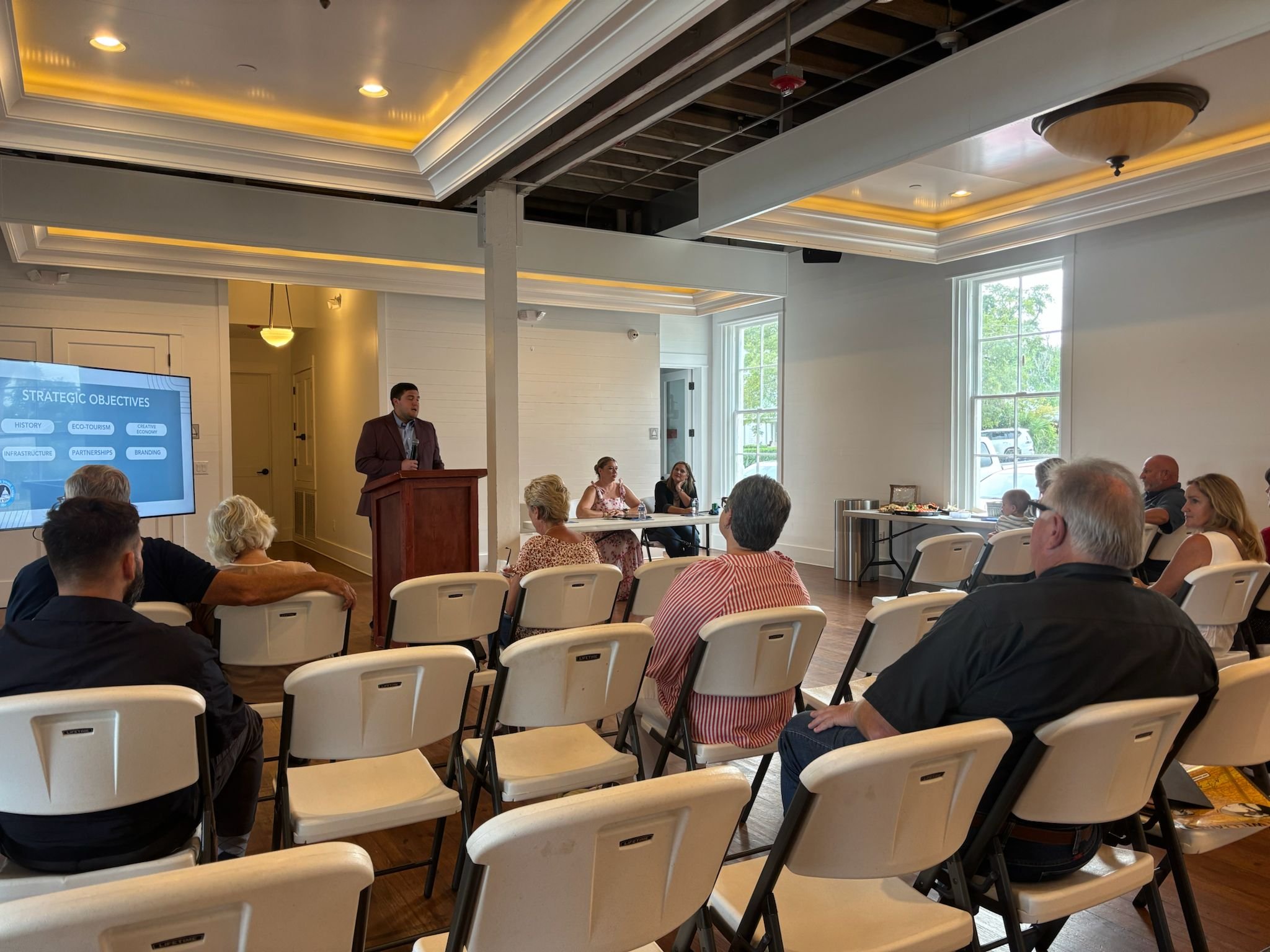
City of DeFuniak Springs City Manager, Koby Townsend giving the opening presentation.
Our goal was to “design with the end in mind.” Before the discussion, we set clear objectives: to identify opportunities to strengthen our tourism brand, define barriers to visitor engagement, and generate ideas for collaboration. With these objectives in place, we built a discussion guide that focused on four core themes: community identity, seasonal events, digital presence, and regional partnerships. The guide served as a roadmap rather than a script, allowing for authentic dialogue while keeping the discussion focused.
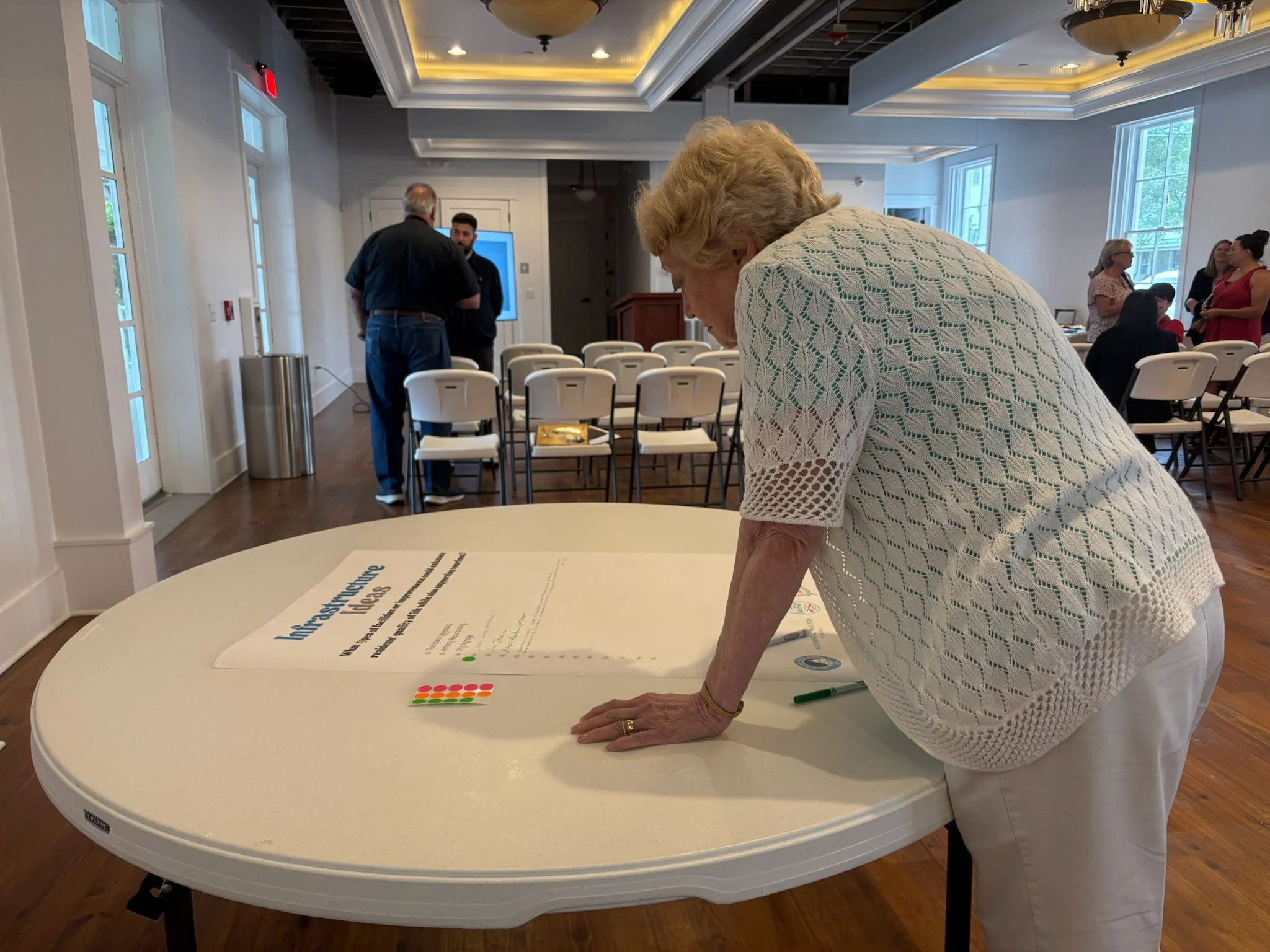
Resident Mindy Henderson writing down her ideas and concepts during the Table Talk.
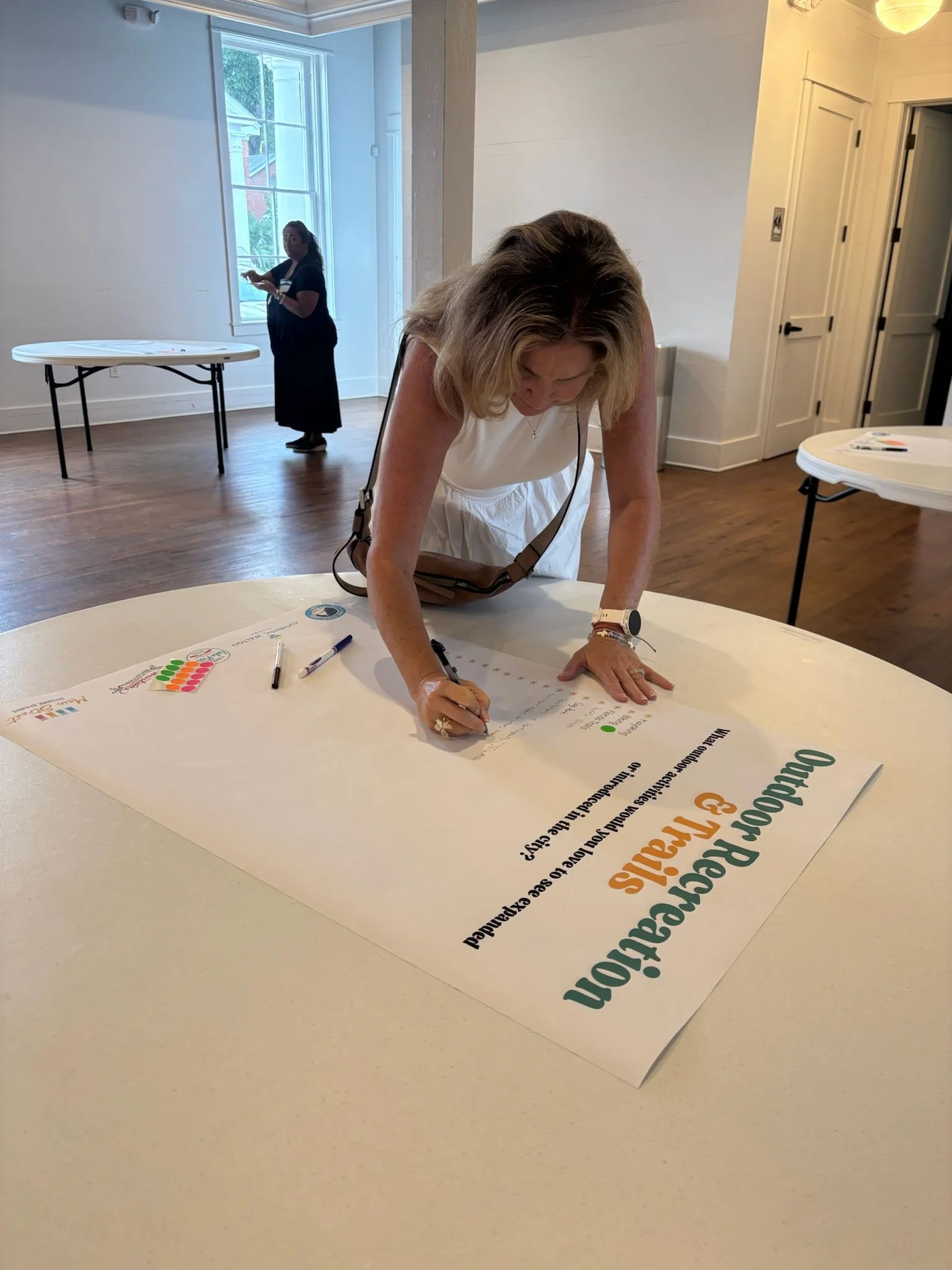
Marketing professional Kerri Parker writing down her creative ideas for recreational tourism.
Instead of using close-ended or data-driven prompts, we relied on open-ended questions such as:
•“What types of events or experiences would make you invite friends or family to visit DeFuniak Springs?”
•“What makes DeFuniak Springs feel like home?”
•“What improvements could enhance residents ' quality of life while also supporting tourism?”
These questions invited participants to share personal stories and opinions with insights that revealed underlying motivations and emotions tied to our city’s tourism experience. This conversational format mirrors the customer visit approach often used in qualitative research, where listening and observation produce a more nuanced understanding than structured surveys can provide.
After the workshop, we applied elements of qualitative data analysis to make sense of the feedback. Comments were reviewed, grouped, and coded into key themes such as heritage storytelling, downtown revitalization, and visitor experience consistency. This method helped transform anecdotal input into strategic insight. One recurring message stood out clearly: people want tourism marketing that reflects who we are: a small town with deep roots, natural beauty, and a welcoming spirit.
By combining structured preparation with open exploration, the workshop yielded more than community feedback, it also offered a blueprint for future action. The input gathered will guide how we frame content, prioritize partnerships, and strengthen the city’s digital presence. It also reaffirmed that the most effective marketing strategies are those built from the community outward.
In civic marketing, qualitative research isn’t just a resource you would use in academia; it’s a form of engagement. Every conversation, every observation, and every note taken in these sessions helps ensure that our tourism efforts remain authentic, relevant, and human-centered. When we design with the end in mind starting from listening and ending with meaningful outcomes. We build campaigns that not only attract visitors but also honor the people who call this place home.
