


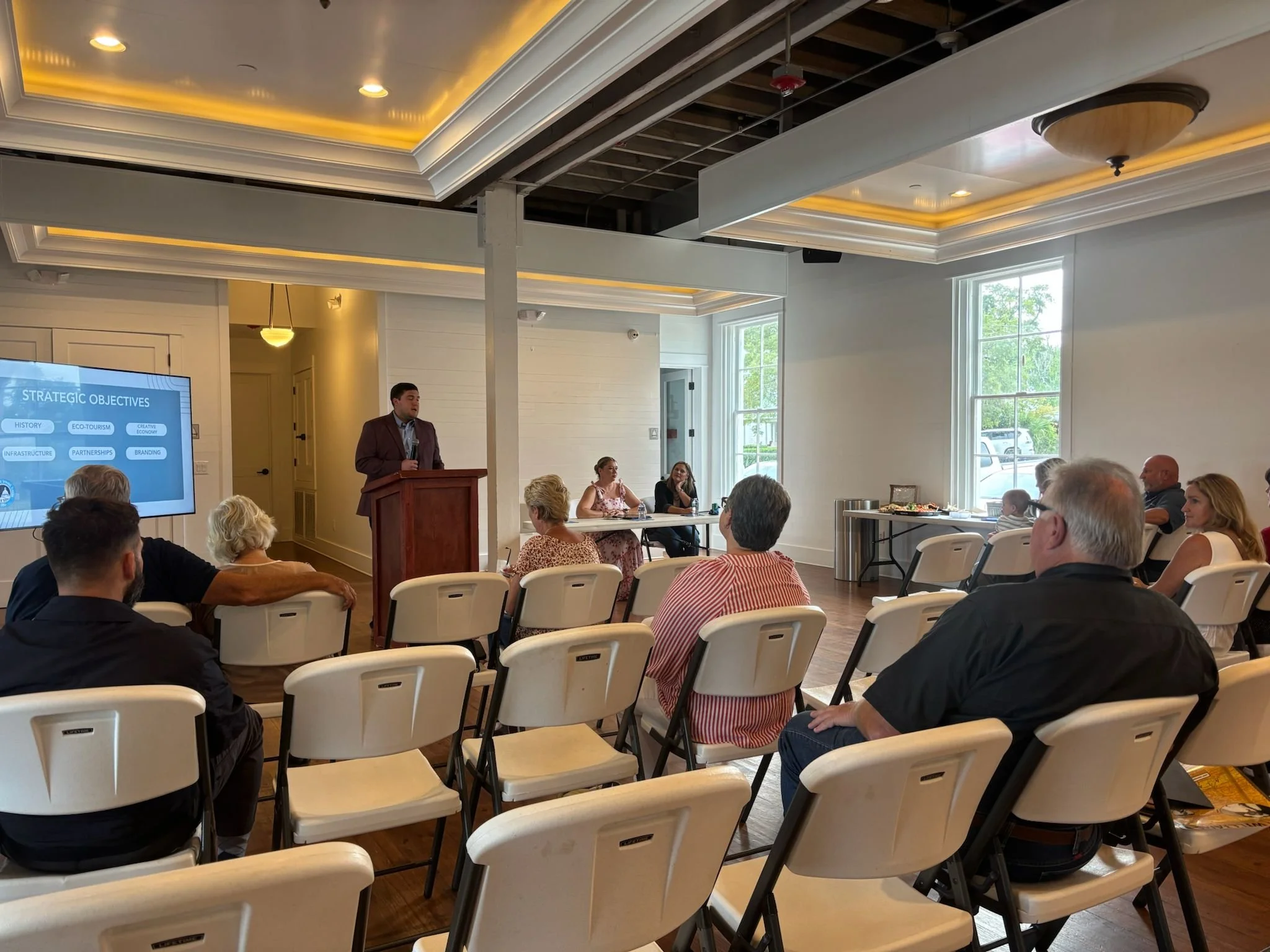
Designing with the End in Mind: Turning Community Feedback into Actionable Tourism Insight
These questions invited participants to share personal stories and opinions with insights that revealed underlying motivations and emotions tied to our city’s tourism experience.

Converting Engagement into Funding: Applying E-Marketing Principles to Grant Success
E-Marketing principles, particularly those focused on traffic, conversion, and revenue, offer a valuable framework for transforming public interest into tangible results. Just as e-commerce websites aim to guide visitors from browsing to buying, municipalities can guide residents, partners, and sponsors from awareness to action.

Quiet Influence: The Power of Consistency Over Clamor
In a digital age dominated by attention-grabbing campaigns and viral trends, the loudest voice often wins the moment, but not the heart. I’ve started using a term that better captures what truly builds long-term connection and trust: Quiet Influence.

Trust as the Currency of Community Marketing
Authenticity is just as important. Communities respond when marketing reflects their values, whether it’s spotlighting local businesses, preserving history, or showcasing natural assets.

Beyond Sight and Sound: Multi-Sensory Marketing in Tourism
When we think of marketing, we often picture visual ads or catchy audio jingles. But the most unforgettable experiences go beyond sight and sound; they tap into all our senses. For tourism, this opens the door to creative strategies that make a destination truly come alive.

Cobranding Partnerships: How Small Cities Boost Tourism Through Social Media
Statistics show that cobranding strategies backed by social media aren’t just creative but they are also highly effective. Travelers are increasingly influenced by authentic, community-driven storytelling rather than traditional advertising.

Differentiation: How Small Cities Compete in a Crowded Tourism Market
In today’s competitive tourism landscape, differentiation is the key to standing out. For destinations that may not have the marketing budgets of major cities, the ability to highlight unique assets becomes a powerful strategy.

Beyond The Clicks: Local Government Marketing
By monitoring funnel conversion rates alongside these deeper, more meaningful exchanges, local governments can see not only where residents drop off in the process, but also what value they’re truly receiving, and returning. This dual approach helps stretch limited budgets and build long-term trust with the community.

Why Word-of-Mouth Still Wins in Tourism Marketing
As marketing experts Philip Kotler and Kevin Lane Keller note in Marketing Management, “word of mouth” is one of the most powerful communication tools available. That was true long before social media—but in today’s digital world, word-of-mouth has transformed into something even more potent.

Segmenting Audiences for Stronger Tourism Impact
In small-city tourism, every dollar counts and so does every visitor. That’s why segmentation is such a powerful tool for local governments and destination marketers. Instead of taking a “one-size-fits-all” approach, segmentation allows communities to design marketing strategies that resonate with specific types of travelers.

Breaking Silos: Aligning Outreach and Development for Stronger Community Impact
In local government, connecting marketing efforts with measurable community outcomes is critical. Too often, outreach and development initiatives operate in silos. Outreach campaigns aim to attract visitors and build awareness, while development teams concentrate on infrastructure, investment, and program delivery. The disconnect can lead to duplicated efforts, diluted messaging, and missed opportunities. For municipalities and tourism-driven communities, the solution

The Power of Small Details in Government and Tourism Marketing
The Power of Small Details in Government and Tourism Marketing