How to Convert Engagement into Loyalty: The Real Value of Social Media Metrics
In the world of tourism and community marketing, success isn’t always measured by how many people see your post; it’s about how deeply they connect with it. Many small cities and local organizations fall into the trap of believing that a social media campaign must “go viral” to be effective. The truth is, sustainable growth comes from consistency, authenticity, and meaningful engagement rather than limited time audience reach.
“ When people feel connected to a brand, a city, or a shared mission, they become advocates who spread that message organically.”
For local governments, tourism offices, or small businesses, social media should serve as a digital handshake that is inviting residents, visitors, and partners into a conversation. The key is to develop a clear plan before posting. Every piece of content should have a purpose: to inform, inspire, or invite action. For example, a tourism campaign that showcases local events, outdoor trails, or historic landmarks can strengthen civic pride while attracting visitors looking for authentic, off-the-beaten-path experiences.
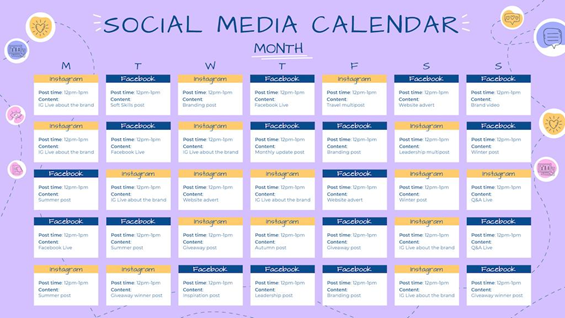
Content Calendar Example
Creating a Content calendar and choosing the right platform is just as critical. While Facebook and Instagram remain ideal for community storytelling, platforms like TikTok and YouTube can drive discovery through short-form video storytelling. For professional audiences, LinkedIn offers an underutilized space for municipalities to highlight economic development projects or public-private partnerships. The secret is knowing where your audience spends their time, then tailoring your tone and visuals accordingly.
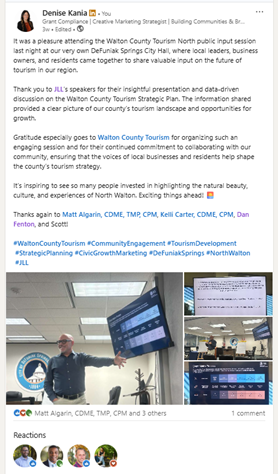
Linked In Post featuring City of DeFuniak Springs posting a Walton County Tourism event.

Social Media Performance Dashboard by Klipfolio
Once content is shared, measuring its success goes far beyond counting likes. Engagement metrics, such as shares, comments, and saves, reveal whether a message resonates enough to spark dialogue. Conversion metrics, such as click-through rates, event sign-ups, or visitor inquiries, show the impact on actual behavior. These insights help refine strategy over time, ensuring that future campaigns are data-driven rather than assumption-based.
One example from my own experience comes from promoting community events like LakeFest and Christmas Reflections in DeFuniak Springs. By tracking engagement rates and audience demographics, we can adjust posting times, test visuals through A/B comparisons, and improve content relevancy. Posts that featured residents and behind-the-scenes stories consistently outperformed generic event graphics because demonstrating that authenticity builds trust and repeat engagement on your platforms.

Example of A/B Testing for Christmas Event Marketing
Ultimately, the goal of social media marketing isn’t just to gain followers, it’s to cultivate loyalty. When people feel connected to a brand, a city, or a shared mission, they become advocates who spread that message organically. For small communities, that kind of genuine connection is far more valuable than any viral post.
